Tuesday, March 27, 2007

Blue volunteers of spring


I'm following the lead of Prairie Bluestem, who always posts such beautiful pictures of the area surrounding her home. These little blue flowers have escaped the bed in which they were planted years ago in our front yard and now make their appearance a little farther out in the yard each spring. Unfortunately I must mow them down soon.

Brilliant morning sunshine welcomed me streaming from my office door the other morning.


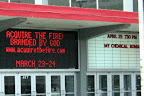
I love ironic juxtapositions like this picture of the Municipal Auditorium that I took the other day. On the left you have, "Acquire the Fire - Branded by God," and on the right you have, "My Chemical Romance." I wonder how well the fans for these disparate events would mix.

Thursday, March 22, 2007

Springtime maliase

Something about the beginning of spring usually finds me in a funk.


Why is that?

I know there are lots of things I should be doing - like landscaping, transplanting azaleas, planting dogwoods and redbuds and sealing my deck.

Then there are the inside jobs - straightening up my garage, building shelves, cabinets and a workbench.


And then there are taxes. Ugh!


Outside Nature is putting on Her best show of the year,

and inside I'm stewing about this stupid little job that must be done every year.


Every year I find a million excuses to not get started on taxes.

I discover boxes of old photographs I've had for decades,


I find songs I need to learn,

I find TV shows I must watch,

and places I must visit.


I absolutely dread taxes.

But when they're done,

as they always are,

the huge weight is lifted from my shoulders,


and I can get on with my life
and enjoy the coming of spring.

Tuesday, March 13, 2007

Old pictures

Last night I scanned a few old pictures from my childhood.

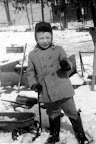
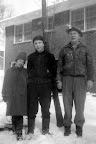
Here I am in 1950 at age four squinting in the bright sunshine reflecting from newly-fallen snow.


Here I am at seven years of age in the summer of 1953 with a box of Boston Terrier puppies that our dog Penny had.


In 1954 at age 8 with my sister Mary on Skyline Drive, which was an afternoon's drive from home outside of Washington, DC.

Easter, age 8 (1954) with my Granddad Bill (dad's father), his wife Edna (my dad's mom died in 1933), my mom, sister and of course our Boston Terrier Penny.

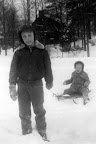
I was pulling my sister on a sled in the winter of 1954.


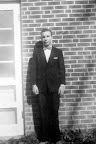
Here I am 1959 at age 13, the completely gawky nerd that I was then when dressed up for church.

But here I am at the same age looking much cooler.


At age 14 with my sister and dad after a big snow.


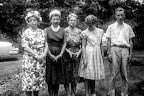
I was still pretty gawky by age 16. Here I am at Easter 1962 in the company of my Aunt Mildred, my mom, my mother's mother and my sister.

Monday, March 12, 2007

A twinge of sadness

XM just played "Dressed up Like Nebraska," by Josh Rouse.

My second wife Nancy got that album for me,
maybe in 2000,
but I didn't care for it,
so she returned it.
She contracted leukemia in the spring of 2002
just as spring was waking up the flowers
and died in the spring of 2003
just as her last spring was waking up the flowers.
Hearing that song just now gave me a twinge of sadness.

It's a Monday

It's a Monday, for sure.
Daylight Savings Time change meant less sleep than usual.


Wifie is on her way to spend the week with a good friend in Memphis.
It's a beautiful day in Nashville,
and I have absolutely nothing to do.

Well, I do have some projects to work on,
but none of them are "critical,"
and everyone else in the building is doing other things.

So I'm cruisin on a Monday morning,
listening to XM Satellite Radio on the computer,
hoping wifie is having an enjoyable and safe trip,
looking forward to Jazzercise tonight,


knowing I have to learn some songs this week
and knowing I'll have my cat Roger to keep me company.

Saturday, March 03, 2007

Nashville Lawn & Garden Show

The day was initially warm and windy, sunny and bright with puffy white clouds chasing across the blue sky. It became increasingly cold and grey as the afternoon wore on, and by late afternoon we saw snow flurries.

We drove down to the Nashville Fairgrounds and visited the Nashville Lawn & Garden Show, where I took these pictures:


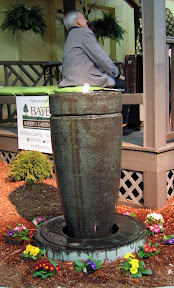
This one ended up looking pretty funny, although when I took it I did not notice the man sitting behind it. It looks like he's sitting in the fountain.


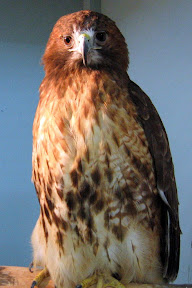
The animal rescue people were there.


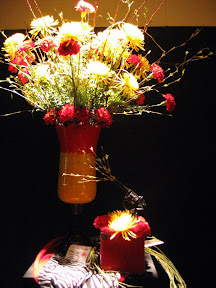
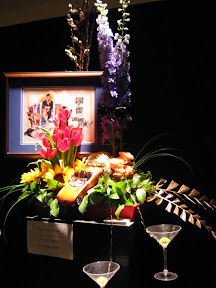
We saw a beautiful collection of flower arrangements, complete with lighting to show them off.


A most unusual vase!


Another unusual vase.


Wednesday, February 14, 2007

Thoughts on turning 61 and how I came to be

It was the middle of May, 1945.
The young couple had celebrated their 2nd wedding anniversary on May 7.

German forces in Berlin had surrendered the city to Soviet troops on May 2, 1945, and the western allies celebrated V-E Day on May 8.

They may have had a romantic dinner,
perhaps a bottle of wine.

A gentle spring breeze was blowing through their bedroom windows,
stirring the curtains ever so slightly.

Forces beyond their control had brought them together.

Cy was born and raised in the tiny town of Gordon (pop. 2,000) in the northwestern part of the Nebraska panhandle.

He began college at Creighton University in Omaha but transferred to Chadron College after his mother's untimely death and graduated from Chadron with an A.B. degree in 1935,
the first of his family line to earn a college degree.

Cy's father Bill, was a rough-shod railroad foreman with steely-blue eyes
who fell in love with Mae, the beautiful Irish daughter of 2nd generation immigrants.

Mae's parents Dennis and Mary moved from Sheboygan Falls, Wisconsin to homestead in some of the last land available in the U.S. in the sand hill country near Gordon.
Mae's father died in his 40s, leaving her mom to raise the family and run the ranch by herself.
Mary was one tough cookie - a great horsewoman and cook.

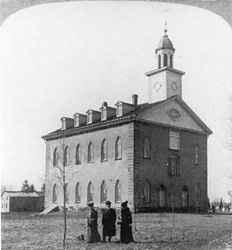
Bill's ancestors immigrated to the New World from England in 1635 and moved west with the first wave of Mormons to leave New England in the 1830s. His great-grandfather John had been a close associate of Joseph Smith and crafted the ironwork for the first Mormon temple in Kirtland, Ohio outside of Cleveland.

Cy was 16 at the beginning of the Great Depression, and he vowed to make a better future for himself than was available to a young man in the vast emptiness of the High Plains during those hard years.

After college graduation, Cy moved to Washington, DC to put himself through George Washington University Law School, taking classes at night while working for the WPA during the day. He received a Juris Doctor degree in 1939 and was commissioned an Officer in the U.S. Navy.

Millie moved to Washington, DC from Plant City, Florida
after graduating from nearby Florida Southern College, staying with an aunt who lived nearby. Millie descended from a long line of college-educated women.
Her great-great grandfather had been a circuit-riding Methodist preacher, school teacher and teacher of singing schools to the sparsely-populated mountains of North Carolina during the early 1800s.

Cy was 26, and Millie was 20 on September 1, 1939 when Hitler invaded Poland and sparked World War II. On September 3 the United Kingdom, Australia, New Zealand and France responded by declaring war on Germany. Japan attacked the U.S. Naval base at Pearl Harbor on December 7, 1941. On December 11 Germany and Italy declared war on the U.S. About 62 million people, or 2.5% of the world's population died in the war.

Cy was commissioned an officer and spent the war as a U.S. Navy lawyer at the Pentagon.

They met while working for the Navy Department in the Navy Annex, which overlooks the Pentagon.
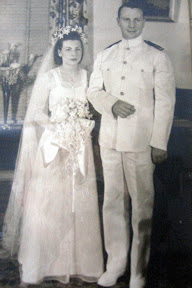
Their wedding was held in Plant City, Florida on May 7, 1943. He was just a month shy of his 30th birthday and cut a dashing figure in his Navy dress whites. She looked the part of a southern belle at age 24 in her long white lace gown.

At the consummation of their love on that warm spring night,
his DNA merged with hers,
and a new being was formed.
The biological instructions in Cy and Millie's DNA had been handed down from their respective parents,
who in turn inherited their instructions from their parents and so on back to the beginning of life on this planet.

She would have been about 11 1/2 weeks pregnant,
and I would have been about the size of a kidney bean
on August 6, 1945 - the day the Enola Gay dropped the atomic bomb dubbed "Little Boy" on Hiroshima.
Three days later, a B-29 named Bockscar dropped the second atomic bomb, "Fat Man" on the port city of Nagasaki. The Japanese surrendered on August 14, or V-J Day.

On a cold Valentine's night in Arlington, Virginia on 1946,
it was almost midnight when
a young mother brought her firstborn into the world
who now writes this post.

Thursday, February 08, 2007

Commercials - the bane of my living room

Why do commercials affect me so negatively?
I wish it were not so,
for when they come on,
my head hurts.

It's like a big ASS comes farting out of the TV screen.


And so I must reach for the remote,
which creates dissent.

If I could,
I would be like everyone else,
and just ignore the commercials.
But there is no other option,
and I must be like myself.

I resent mind control.

I will not
drink their beer,
watch their movie,
or buy their car.

I will not be manipulated.

I must lack some filter
that everyone else has,
or maybe my ears are just too sensitive

Sometimes I do not like being me.

This is the next day, and I've had time to think more about this issue.

I think my distaste for commercials is rooted in three of the central traits of my personality.

One:
I'm the poster child for adult ADHD;
I am HIGHLY distractable.
In college I had trouble finding a place to study.
The dorm was too noisy,
and the library was too quiet;
the books on any nearby shelf always beckoned for my attention.
I could always find a reason to procrastinate and do anything other than studying,
such as making up song lists for my band.

This explains my mediocre college grades.

And so I cannot resist the distraction of commercials;
they intrude on my serenity
and make it impossible to think about anything
other than what they are trying to sell me.
(Which I know is their purpose.)

Two:
My ears are extremely sensitive to input.
(I don't mean that I can hear better than other people,
because I often have trouble understanding speech).

I mean that sounds affect me more - or differently - than most people.

When I first started work for C&P Telephone in 1969, the business office where I worked had Muzak playing through the overhead speakers. The sounds of crappy elevator music nearly drove me crazy, although the office full of 75 other workers seemed unaffected. I remember holding both my hands over my ears trying to concentrate on writing memos.

And so commercials rivet my attention in a very uncomfortable way.

Is this a kind of insanity - experiencing a vastly different reality than anyone else?)

Three:
I crave independence of thought.
Some kind of internal "intrusion attempt alarm" (for want of a better word) goes off in my head whenever I suspect that I am the object of an attempt to manipulate me.
I cannot control the bristling feeling inside when a voice shouts at me from the TV set,
or the seductive scene begins
that will end in a car commercial
or an ad for a TV show or movie.

It doesn't really matter whether I like the product or not;
I just cannot stand being manipulated.

Is this a kind of insanity?

I grew up in the 1950s-60s during the struggle for Civil Rights and the conflict over the Vietnam War.
Now in retrospect I realize that I had been fed a pack of lies all along.

Lies about the inferiority of black people,
lies about the nobility of the southern cause in the Civil War,
lies about the Vietnam war,
lies about Russia,
lies about sex.

It took nearly a lifetime for me to come to my own conclusions about these issues.

In the 1960s I wasn't sure who was telling the truth about Vietnam.
In college I had John Birch Society friends and listened to their impassioned arguments;
I also had "hippie" friends whose walls were plastered with SNCC and SDC anti-war posters;
I also listened to their impassioned arguments.
I tried my best to understand each point of view,
because I sensed that the real truth lay somewhere in between.

I remember seeing news of forced school integration in the south;
the fire hoses being turned on crowds of black people;
the violence after Martin Luther King's assassination.
From our house I could see the smoke rising from the riots in Washington DC.
I believed violence and destruction was wrong.
(In retrospect I don't know how else such fundamental social change could have come about.)

All the same, I was not one of those brave souls who participated in the protest marches.
I served in the Navy during 1968-69
and immediately thereafter began a career with C&P Telephone Company,
and was too concerned about keeping my job and supporting my family.
I stayed on the sidelines of life,
letting other people with stronger convictions man the front lines.

Boy, this post is wandering far afield from its initial focus on my distaste for commercials.
I suppose I got going on the track of explaining how I have acquired a built-in distaste for attempts to convince me of something I know I should determine for myself.

Okay, now I've wasted sufficient time at work
instead of doing my job.

Do you see that this is a perfect example of my ADHD?

To be continued...

Wednesday, January 24, 2007

Antique computers

I was first exposed to mainframe computing when I joined C&P Telephone Company in 1969 as Assistant Manager in the Fairfax, VA Business Office. I toured the company's billing office in Richmond, which used an IBM 360 mainframe with 16K of memory and took up an entire huge room, complete with its own cooling system. The floor was raised about a foot to make way for the extensive amount of wiring that connected the various elements of the computer.


Service Order Typists in the Business Office cut the orders using the Model 28 ASR Teletypewriter, which used 5-channel paper tape.


The Service Order Bureau also had a few of the "newer" 35 ASR Teletypewriter, which used 8-channel paper tape.


Service Order Representatives in the Business Office would hand-write the order on a special form. The orders were carried via a pneumatic tube system (which I designed) to the Service Order Typing Bureau. There Service Order Typists would create a punched paper tape. Each character was represented by a specific pattern of holes in the paper tape (either 5- or 8-channel). This tape was then fed through a tape reader. As the tape advanced to each position, little metal fingers protruded through each hole in the tape, generating an electric signal that was sent out over the service order network. The network operated at 110 baud, meaning that 110 characters were sent per minute. A long service order for a business with many extensions could take hours to transmit.
The service order network was hardwired and dedicated to only service orders. If one printer ran out of paper or jammed in the dozens of locations to which the multi-leg circuit terminated (which happened frequently), the entire network would go down until someone was dispatched to fix the problem.

In 1974 when I joined C&P's headquarters forecasting staff, I learned to use the mainframe timeshare (VM/CMS) system, with which I created mathematical models of customer demand using linear regression and multivariate econometric models. These models were run using "STATLIB", which was an acronym for "Bell System Statistical Computing Library." STATLIB was a high-level language based in FORTRAN and developed by Bell Labs. Input (data and models) was created by paper tape, which was fed into the computer and run on the mainframe, which was located in New Jersey. Most programs were run in batch mode, and the printed output would arrive several days later.

About that same time I bought a Timex Sinclair 1000 for my home, with which my son and I discovered the joys of programming in BASIC.


In 1984 my division received our first IBM personal computer, which was shared among 14 people. I was one of the early adopters and shortly thereafter spent $4,000 to buy an IBM PC-1 for my home, with which my son and I discovered how to write simple graphics programs using BASICA. It came with 64K of RAM, which I upgraded to 640K, the maximum that DOS could address at that time.


Thursday, January 18, 2007

The strange story of my first car

Here I am leaning against my first car.
It was a 1964 Chevy Nova, which my dad purchased for $800 and gave me for a combination college graduation/wedding present.
I paid half, as I had saved $400 to buy a car upon graduation.

It had a 3-on-the-column stick shift and an in-line 6-cylinder engine that got about 18 mpg.
It had no air conditioning but did have Positraction (limited slip differential), which was very handy on icy roads.
It was our sole family vehicle for the first 3 years of my marriage.


We used to drive it to the Outer Banks of North Carolina for family vacations.
We'd leave by 4:00 a.m. to take advantage of the cool morning air and let the kids sleep in the back.
We'd stop at Williamsburg by 7:00 a.m. for breakfast, then arrive at the beach before Noon.

I sold it to a "friend" sometime in the mid 1970s.

I enclosed the word "friend" in quotes because he had an affair with my wife.
Or maybe she had an affair with him.
Either way it still hurts.
He was an ex-con.

Anyway, shortly afterwards he gave the car to a new girlfriend.
He gave her the car because she was short of money.

Her name was Ellen "Kay" Hatch, Executive Director of the National Kidney Fund,
and it seems she got pretty good at her job.

Here's a Washington Post article about her:

Frances Sauve
February 19, 1981; Page C8

The National Society of Fund Raising Executives has presented its Greater Washington Metropolitan Area Fund Raiser of the Year award to Ellen Kay Hatch, national Executive director of the American Kidney Fund. Hatch, whose area of fundraising expertise is direct mail, raised more than $3 million in 1980 for the Kidney Fund, with fund raising and administrative costs of less than 28 percent. The foundation provides direct financial assistance to kidney patients across the nation.

Four years later Kay was found dead of a self-inflicted gunshot wound.
Here's the Washington Post article:

Kidney Fund Sues Aide's Estate

Lee Hockstader and Patricia Davis, Washington Post StaffWriters
November 22, 1985; Page C1

The American Kidney Fund has filed suit in Fairfax County against the estate of the executive director of the Bethesda-based charitable organization, who committed suicide in June, alleging that she "wrongfully diverted" more than $1.4 million into three bank accounts she kept secret from the fund.


Ellen Kay Hatch, 44, who had been executive director since 1974, was found with a gunshot wound to her chest June 29 in an empty Jacuzzi in her Herndon home, according to Fairfax County police. About a month earlier, she had been fired by the board of trustees of the fund, which had discovered the alleged misappropriation, the executive director of the fund said.

I have often wondered about the connections between these people.